





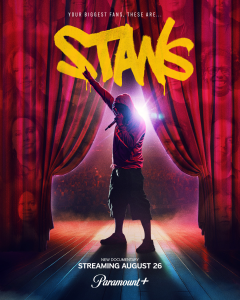
Eminem’s track “Stan”, released in 2000, gained popularity for the unusual story the lyrics conveyed, detailing a fan’s unhealthy obsession for the rapper. From this song originated the term “stan”: a stalker-fan. In August of 2025, the documentary Stans was released in which self-proclaimed Eminem stans were interviewed and asked about their relationship to the artist.
Almost all of the interviewees were stans, using this controversial label with pride. Those in the documentary who weren’t stans were friends of Eminem, or had worked with/admired him in the music industry. While this positive demographic was essential for the documentary, considering it explores this intricate relationship of artist vs. community, there were no opposing viewpoints. Not even casual fans of Eminem were interviewed, making this documentary seem unusually biased. This bias raises questions among viewers: what about the fans who aren’t crazy about Eminem? Why not portray any other relationship? Were these interviews biased to create a point about Eminem’s fans and their relationship to him? Regardless, there is a very obvious inclination towards Eminem’s more invested fans.
While “stan” was a term that originally referred to a fan with obsessive tendencies, the meaning was diluted into a spectrum of definitions, especially within the Eminem community. The stans being interviewed were all very passionate about Eminem, but some were clearly more so than others. Some fans claimed to simply admire his work and artistic liberties, while others showed off tattoos of his face and even claimed to know him personally, despite never exchanging a word with him. As someone who isn’t a part of
the Eminem community, it was certainly a concerning and even disturbing thing to watch. The intense parasocial relationships some of the fans described brought up a difficult question: was the documentary meant to be satire? Some of the claims the fans made were so extreme that it felt as if they had been specially chosen to be interviewed for their shock factor. Though, some of these stans were aware of their zealous behavior. Especially after the song “Stan” was released, it brought those behaviors to the attention of some of these fans and many of the stans referred to the song, stating, “That’s probably how [the people around me] see me.”
The overwhelming positivity made it clear that the documentary was made for an older audience who had grown up with Eminem and loved his music from the beginning. Watching this as someone from a younger generation, the difference in viewpoints becomes obvious as many stans who were interviewed talked about loving Eminem since they heard his first song on the radio. Without this love of Eminem from day one, and not being there to witness him skyrocket into fame, this film has a different tone. While not necessarily detrimental to the point of the documentary, it does change how older generations might perceive this as opposed to younger generations.
Throughout the documentary, the stans made lots of comments about how stressful and scary the Stan situation might’ve been for Eminem. However, Eminem has never really given his opinion about obsessive fans like the one depicted in the popular song. That is, until the documentary came out. Despite the primarily negative light the fans had been portrayed in throughout the movie, Eminem completely disregards this by saying, “A true, die-hard fan really does, I think, understand me and every aspect of me.” This ending completely shocks the viewer and puts a twist on the entire purpose of the film.
Overall, this documentary brought up various questions among the audience. Was it satirical? Why only interview obsessive stans? Despite this, Stans made a compelling statement on Eminem’s relationship with his fans and how this strong fan base, even considered parasocial by some, leaves Eminem seemingly unaffected. Despite the controversy of his fan base, and the firsthand interviews of stans with unusual behaviors, Eminem still appreciates the support of his fans and recognizes their dedication to him and his music.